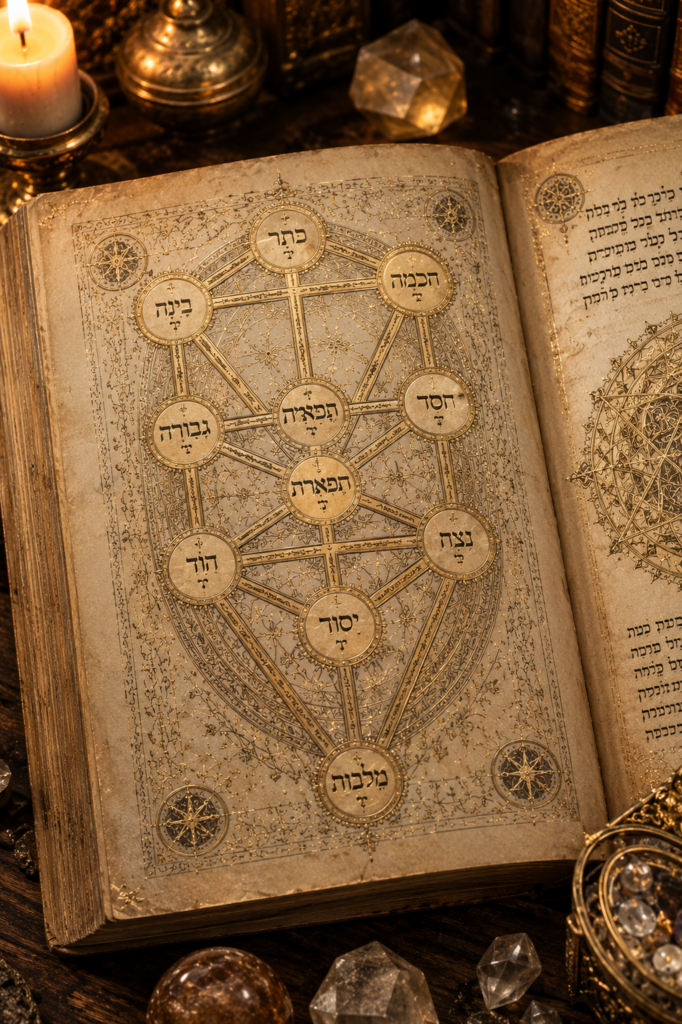
Malkhut is the last of the ten Sefirot. It is where everything above it — all qualities, insights, intentions, and inner movements — finally becomes real. Not as a concept. Not as a possibility. As something that actually exists in the physical world, in time, in a body, in a life. Malkhut is the act of landing.
The Hebrew word means kingdom, but in the most intimate sense: the domain of your actual lived experience. Your body, your daily actions, your relationships, your environment, the physical reality you move through each day. This is the territory where everything either becomes real or remains an idea. Where the spiritual becomes practical. Where the inner becomes outer.
Many people are comfortable living above Malkhut — in thoughts, plans, intentions, and inner work. Yet Malkhut reminds us that presence is not only an inner state. It is an outer one. The question of Malkhut is not what do you understand, but what is actually here, now, in your body and your life.
In the body, Malkhut corresponds to the feet. To the feeling of weight, ground, and gravity. When you feel your feet on the floor, you are working with Malkhut. When you take one clear physical action toward something you say you value, you are working with Malkhut.
**Practice:** At the end of each day, ask one concrete question: what did I actually do today that made my world slightly more aligned with what I care about? Not what did I think or feel — what did I do? Then choose one action for tomorrow.
Body practice: feel both feet on the floor. Let your weight fully arrive in your legs. Say inwardly: I am here. Then let the next action come from that landing.
**Pitfall:** When Malkhut is blocked upward, life feels abstract — much meaning, little tangible reality, many intentions, few completed actions. This is often a fear of the finality of landing. Once something is real, it can be seen and judged. Staying above Malkhut can be a form of protection from the vulnerability of actually existing in the world.